When you first bought your hybrid—maybe a sleek Toyota Prius or a rugged Ford Escape Hybrid—you likely factored in the stellar gas mileage. But did you consider how that sophisticated blend of gas engine and electric motor would change your relationship with the service bay? Probably not. It’s a common misconception that maintaining a hybrid is just like servicing a traditional vehicle, only with a battery thrown in. That couldn't be further from the truth. Servicing a hybrid is an entirely different discipline, requiring specialized tools, different fluid schedules, and a deep understanding of high-voltage systems. If you want your hybrid to last the full distance, you need to know exactly why it needs a different touch.
Unique Powertrain Service
Your hybrid engine doesn't work as hard as a traditional gas engine. Why? Because the electric motor takes over during low-speed driving and idling, shutting down the internal combustion engine frequently.
This stop-start nature translates directly into savings on routine maintenance. Although most traditional cars require an oil change every 5,000 to 7,500 miles, many hybrids can safely stretch that interval to 7,500 or even 10,000 miles. That’s fewer trips to the mechanic and less money spent on synthetic oil.
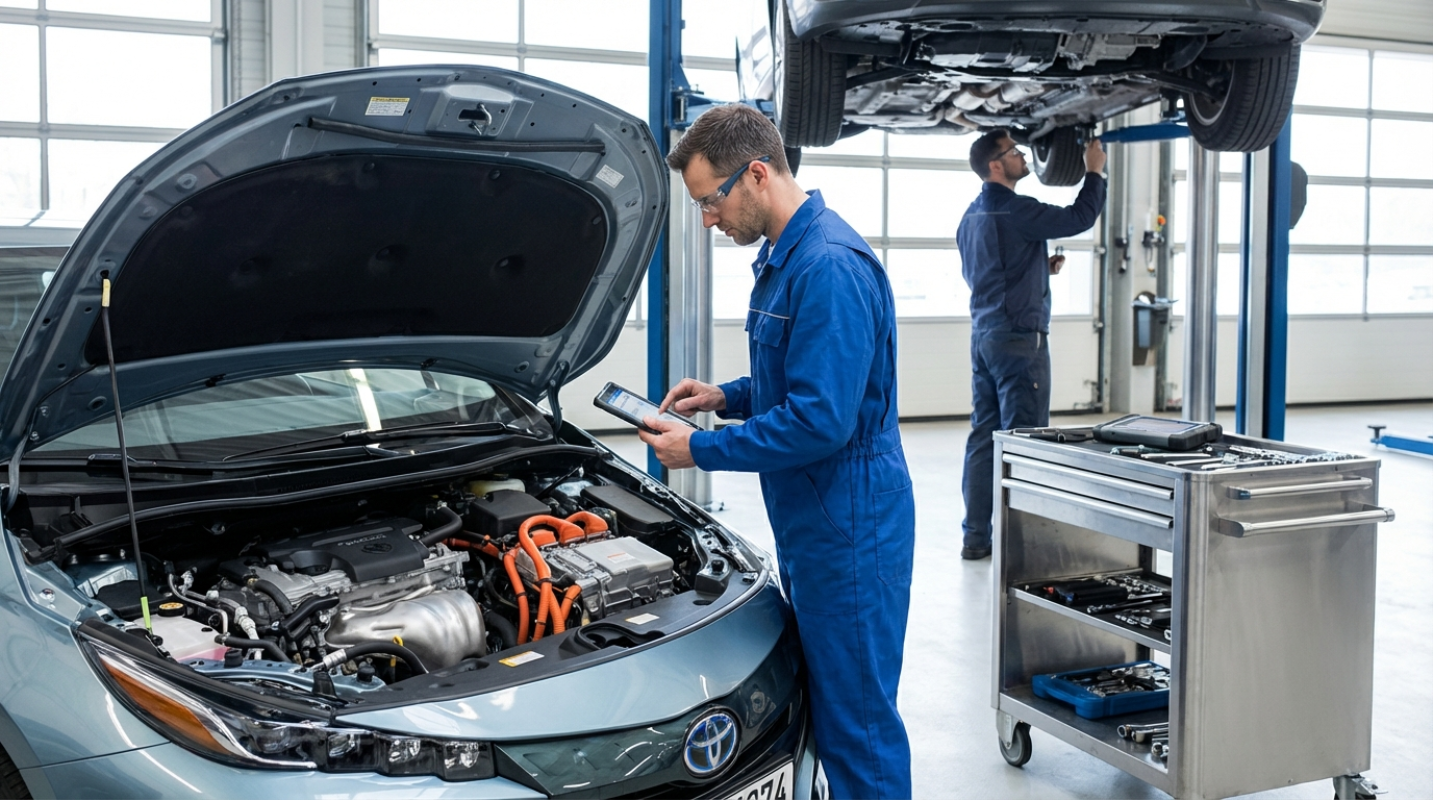
But the engine is only half the story. Hybrids have two distinct cooling systems: one for the gasoline engine, and a completely separate one for the high-voltage battery and the power inverter. If your technician only checks the engine coolant, they’re missing a important system designed to prevent your expensive battery from overheating. You need a mechanic who understands that the inverter coolant needs monitoring and flushing, often recommended every 50,000 to 100,000 miles.
Finally, diagnostics are important. Hybrids generate specialized fault codes related to energy distribution, motor performance, and regenerative braking. Standard OBD-II readers often can’t decipher these hybrid-specific warnings. If your shop doesn't have the specialized diagnostic equipment, they aren't equipped to find the root cause of a complex hybrid issue.
Servicing the Hybrid Battery System
This is the biggest differentiator, and frankly, the scariest part for many owners: the high-voltage battery.
Unlike the 12-volt battery that starts your car, the main hybrid battery pack operates at significantly higher voltages. This isn't something your local shade-tree mechanic can casually poke around with. Any service involving the battery pack or related components—like the inverter or the power control unit—requires technicians with high-voltage safety certifications and specialized training.
A key maintenance step unique to hybrids is the regular battery health check. This isn't just an upsell. Professional checks monitor the charge level, clean terminals to prevent corrosion, and make sure the dedicated cooling system is functioning bestly. Keeping the battery healthy is the single most important thing you can do for the longevity of your car.
Although modern hybrid batteries are highly reliable and typically warrantied for eight to ten years, the cost of eventual replacement remains high, often ranging from $3,000 to $6,000 or more. That’s why proactive, specialized maintenance is non-negotiable; it helps push that replacement date far into the future.
Brakes and Tires
Here’s where your hybrid starts saving you money in unexpected places.
Thanks to regenerative braking, your friction brakes—the pads and rotors—get a vacation. When you slow down, the electric motor acts as a generator, capturing kinetic energy and sending it back to the battery. This means the traditional friction pads only engage fully during hard stops or at very low speeds.
The result? Hybrid owners frequently go much longer between brake pad replacements than traditional car owners. One 2020 study estimated that lifetime maintenance and repair costs for plug-in hybrids were about 50% less than comparable gas-powered vehicles, a difference largely driven by brake savings.
But this reduction in usage creates a different maintenance need: brake fluid checks. Because the friction brakes are used less often, it's important to make sure the brake fluid remains clean and contaminant-free.
Tires also require special consideration. Hybrids weigh more than their gas counterparts due to the heavy battery pack, and they often use low-rolling-resistance tires. These tires are designed to get the most from efficiency and must be replaced with the exact specification recommended by the manufacturer. Using the wrong tire can dramatically reduce your fuel economy and negatively impact handling.
Finding the Right Technician
The biggest challenge in hybrid ownership isn't the technology; it's finding someone qualified to service it.
You shouldn't settle for a shop that "thinks" they can handle your hybrid. You need a technician who is ASE-certified in hybrid repair or, ideally, manufacturer-trained. Before handing over your keys, ask direct questions
- Do you have specialized diagnostic tools for hybrid battery management systems (BMS)?
- Are your technicians certified in high-voltage safety?
- Have you serviced this specific make and model before?
If they hesitate or sound unsure, find another shop. Investing a little more upfront in a service center that truly understands your dual powertrain will save you from catastrophic, high-voltage repair bills down the road.
Ultimately, the differences in hybrid vehicle service boil down to complexity and safety. Although you’ll enjoy less frequent oil changes and brake savings, you must respect the high-voltage components. Treat your hybrid like the specialized machine it is, and you’ll be rewarded with years of efficient, reliable driving.