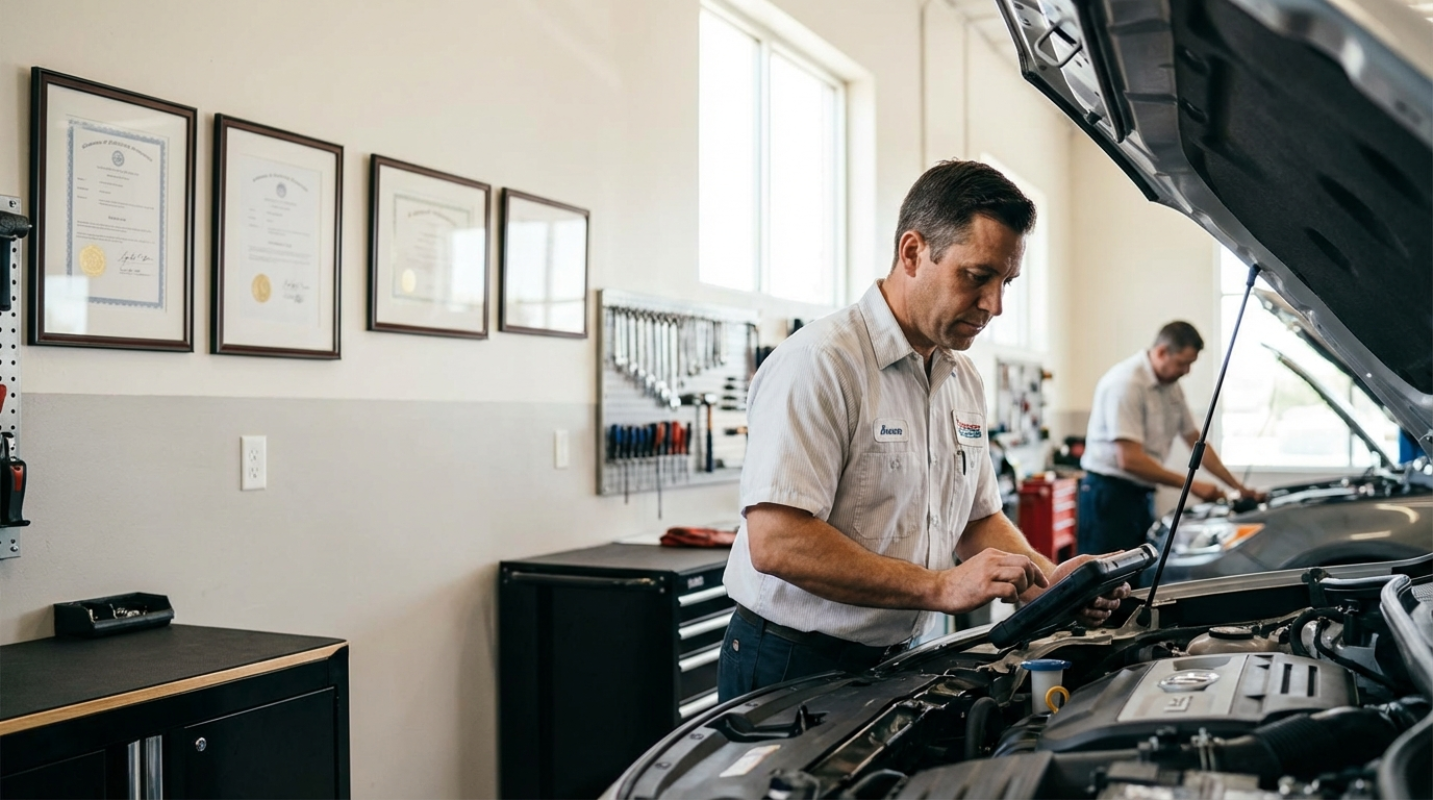
It’s happened to everyone. Your car needs major work—maybe a mechanical breakdown, or worse, a collision—and you’re suddenly faced with a wall of shiny repair shops, all promising quality service. How do you know which one to trust with your thousands of pounds of high-tech machinery? The answer lies in the plaques hanging on the wall and the stamps of approval on the shop’s website. These aren’t just decorative; they are repair shop certifications, and understanding them is the single most important tool you have for protecting your vehicle, your wallet, and your safety. Think of a certification as an external audit. It proves that a shop or technician hasn’t just claimed competence, but has invested time, money, and rigorous testing to meet a recognized industry standard. We’re going to demystify the alphabet soup of certifications and show you exactly what to look for when your car is on the line.
The Big Three: Understanding Major Automotive Certifications
When we talk about quality assurance in automotive repair, three names dominate the conversation. These certifications cover everything from routine brake jobs to complex structural collision repair.
ASE The Gold Standard for Technicians
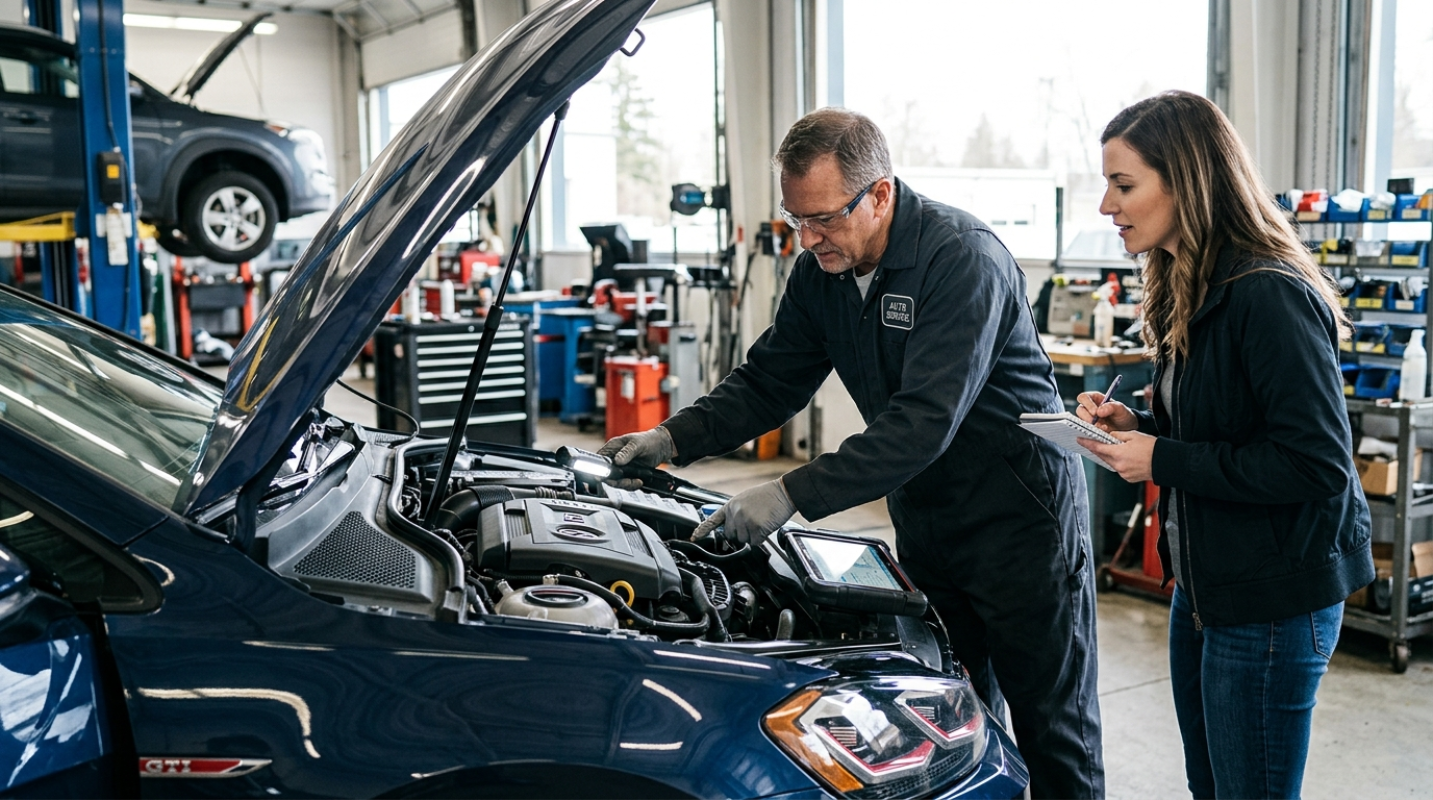
The National Institute for Automotive Service Excellence (ASE) is arguably the best-known certification. If you see the ASE Blue Seal of Excellence, you know the individual technician handling your vehicle has proven their knowledge.
ASE doesn't certify the shop; it certifies the person. To earn an ASE certification, a technician must pass a specialty exam and have two years of relevant work experience. Because technology changes so fast—especially with the rise of hybrid and electric vehicles—ASE certifications aren’t forever. Technicians must recertify every five years through an exam or use the ASE Renewal App to make sure their knowledge is current.
If you’re having mechanical work done, always look for the technician’s ASE credentials. It’s the professional equivalent of a master’s degree in car repair.
I-CAR Collision Repair Excellence
Although ASE focuses on the mechanic, I-CAR (Inter-Industry Conference on Auto Collision Repair) focuses heavily on the shop’s training standards, specifically for collision repair. This is where safety gets non-negotiable.
The highest recognition I-CAR offers is Gold Class status. Achieving this means the entire facility—estimators, structural technicians, non-structural technicians, and painters—has completed rigorous, ongoing training. Importantly, I-CAR requires annual training updates to maintain Gold Class status. This make sures that when a new model hits the road with new materials or safety cage designs, the shop knows how to repair it correctly. This commitment is so important that I-CAR updated its Gold Class requirements in 2025 to incorporate the latest role-relevant online Advanced Driver Assistance Systems (ADAS) courses.
If your car has been in a crash, choosing an I-CAR Gold Class shop make sures they are trained to restore the vehicle's structural integrity and safety systems, not just its appearance.
OEM Certifications Brand-Specific Precision
Original Equipment Manufacturer (OEM) certifications are highly specialized and often the most difficult to obtain. These programs are established by the car makers themselves—think Ford, Toyota, BMW, or Tesla.
Why are they necessary? Modern vehicles are complex ecosystems designed to work only one specific way. An OEM certification confirms that the repair facility has invested in the exact, proprietary diagnostic tools, welding equipment, and software needed to follow the manufacturer’s procedures precisely. Like, the Ford Certified Collision Network requires extensive ADAS and Electric Vehicle (EV) training, including a 2-Day Hands-On ADAS Calibration course.
OEM certifications are needed for maintaining your vehicle’s safety ratings and warranty validity after a repair. If you drive a newer vehicle with advanced tech, demand an OEM-certified shop for collision work.
Beyond the Wrench Specialized and Niche Certifications
The complexity of today's vehicles means that general certifications aren't enough. Modern repair increasingly requires specialized training for specific systems.
ADAS Calibration Certification
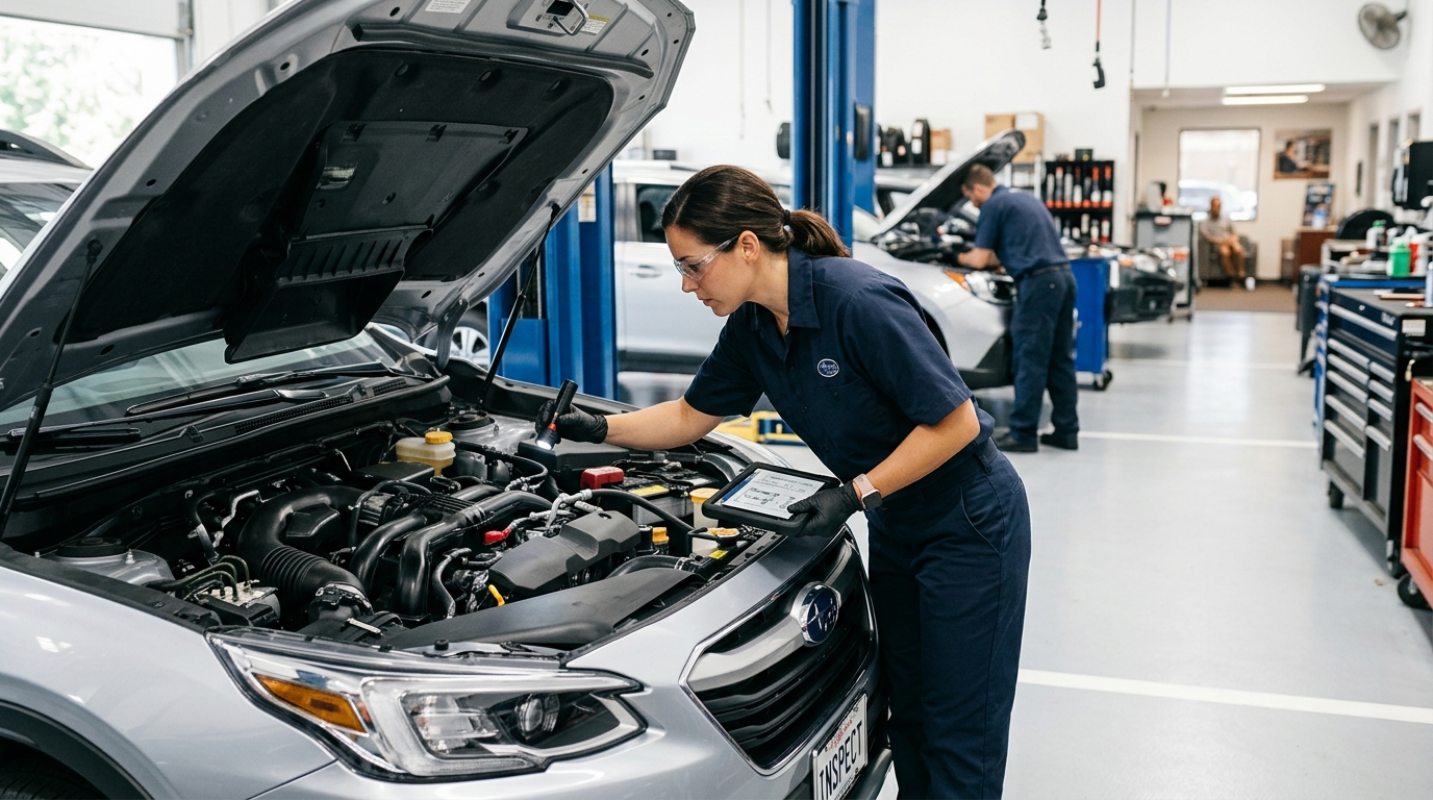
Advanced Driver-Assistance Systems (ADAS)—the sensors and cameras that power features like automatic emergency braking and lane-keeping assistance—are now standard. If a shop replaces a windshield, a bumper, or even a side mirror, the ADAS sensors must be recalibrated.
A shop certified in ADAS calibration has the dedicated space and expensive equipment (often costing hundreds of thousands of dollars) to make sure these safety features work perfectly before the car leaves the bay. If your lane-keeping assist is off by half a degree, you could be in serious trouble. Certification here is literally a matter of life and death.
Environmental and Specialized Mechanical Training
For mechanical shops, other specialized certifications matter, too. Like, any shop dealing with vehicle air conditioning must hold HVAC/R certifications to make sure they handle refrigerants responsibly and comply with strict environmental regulations. Similarly, as EVs proliferate, specialized training in High Voltage Safety becomes mandatory. You don't want an untrained tech accidentally touching a 400-volt battery pack—it’s dangerous for them and could destroy your vehicle.
What Certifications Mean for Your Wallet and Safety
It’s true that certified shops often charge slightly more than uncertified competitors. But that added cost is an insurance policy. It covers the shop’s massive investment in training, tools, and ongoing audits.
A certified repair is typically a long-lasting, effective repair. Proper training reduces the chance of errors, which saves you money in the long run by avoiding expensive comeback jobs.
More importantly, certification protects your warranty and vehicle resale value. If a major structural repair is done incorrectly by an uncertified shop, the manufacturer may void your structural warranty. When it comes time to sell, having documentation that the vehicle was repaired according to OEM standards is a huge selling point. You aren’t just buying a repair; you’re buying guaranteed compliance.
How to Verify and Choose a Certified Repair Provider
The power is in your hands. Don’t simply trust a website badge; verify the credentials.
For ASE certifications, you can often check the technician’s name or certification number directly on the ASE website. For I-CAR, the Gold Class designation is publicly searchable. OEM programs usually list their certified facilities on their brand’s official website.
If a shop claims to be certified but can’t produce verifiable documentation or their plaques look suspiciously dusty and expired (remember that five-year renewal!), take it as a red flag.
When choosing a provider, prioritize certification for any complex or safety-important job—collision repair, ADAS calibration, or high-voltage work. These certifications aren't just bureaucratic hurdles; they are proof that the shop cares enough about your safety to invest in doing the job right, the first time.
Top Recommendations for Your Next Repair
When seeking service, ask these direct questions
- Are your technicians ASE certified?
- If this is collision work, are you I-CAR Gold Class?
- Do you hold the specific OEM certification for my vehicle brand (e.g., Toyota, Ford)?
- Do you perform in-house ADAS calibration?
Choosing a certified repair shop isn't about paying for a fancy name; it’s about demanding professionalism. You wouldn’t let an unlicensed doctor operate on you, so don't let an untrained technician operate on your car.
Articles on affordableautomotiveservice.com are for informational purposes only and do not provide professional or legal advice. Consult an expert before making decisions. We are not responsible for actions taken based on this content.