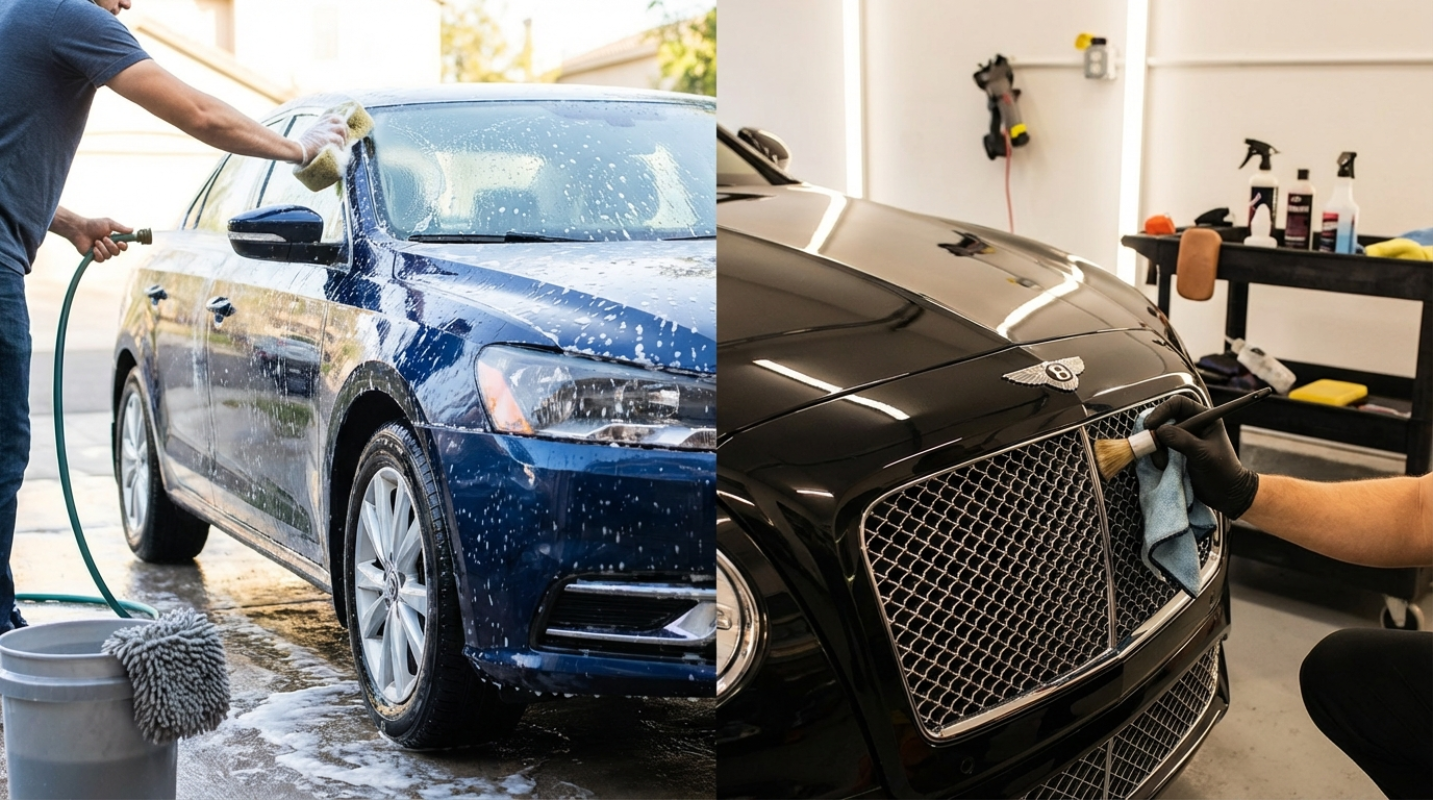
For many, a car is the second-largest investment they’ll ever make. You wouldn’t trust your retirement portfolio to an amateur, so why would you trust your vehicle’s important paintwork and interior surfaces to the cheapest wash-and-wax guy you can find? The difference between a cheap car wash and professional auto detailing isn't just a matter of price; it’s a matter of preservation. Choosing a trustworthy detailer is the single best defense against premature paint failure, interior wear, and the long-term headache of correcting mistakes made by inexperienced hands.
Why Choosing the Right Detailer Matters for Vehicle Longevity
When you pull into a standard car wash, you’re getting a quick cosmetic cleanup. When you hire a professional detailer, you’re paying for meticulous decontamination, correction, and protection.
The risks of using an unreliable service are significant. They might use caustic, non-pH-neutral chemicals that aggressively strip away protective waxes and sealants, leaving your clear coat vulnerable. They often use incorrect washing techniques, introducing swirl marks and micro-scratches that permanently dull your vehicle’s finish. Think of it like a cheap dentist: the quick fix might look fine today, but the hidden damage will cost you thousands down the road.
Trustworthiness, then, isn't about the sparkle you see immediately after the service. It’s about the protection and longevity baked into their process. Your goal is to find someone who treats your vehicle not just as a job, but as the expensive asset it is.
Vetting Credentials and Online Reputation
Before you even step foot in a shop, the internet can tell you volumes.
Start by analyzing online reviews, but don't stop at the star rating. A trustworthy detailer may occasionally get four stars, but the reviews will focus on their communication, attention to detail, and willingness to correct minor issues. Red flags? Vague reviews or those complaining specifically about damaged trim, unexpected fees, or lack of professionalism.
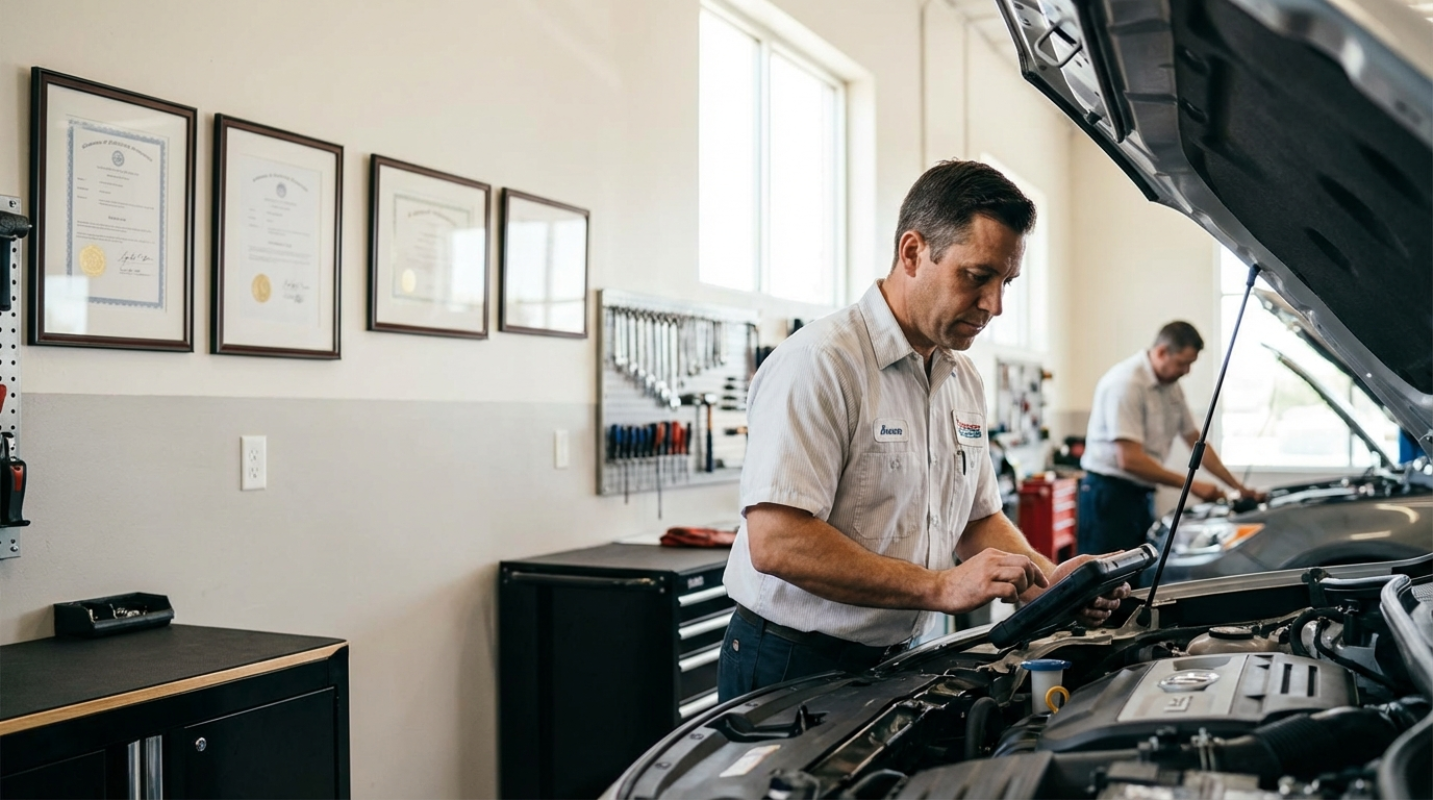
Next, check for professional affiliations. This is the digital equivalent of checking a doctor's diploma. The gold standard in North America is certification from the International Detailing Association (IDA). When a detailer has an IDA Certified Detailer (CD) or, better yet, a Skills Validated (CD-SV) credential, it proves they understand the science behind detailing, including proper chemical usage and safety protocols.
To maintain that certification, detailers must complete eight hours of continuing education every two years. This is a important indicator that they stay updated on the automotive industry’s constantly changing techniques and products. They aren't relying on outdated methods from 2005.
Finally, scrutinize their portfolio. Look for high-quality, consistent before-and-after photos, especially showing paint correction work under bright, controlled lighting. If all their photos are taken in dark garages or hazy sunlight, they might be trying to hide imperfections.
What to Ask About Products and Techniques
A truly trustworthy detailer won’t hesitate to discuss their tools and chemicals. If they get defensive when you ask what products they use, walk away.
You need to know about the chemicals. Are they using pH-neutral soaps and safe compounds, or cheap industrial detergents? This isn’t just about protecting your paint; it’s about environmental responsibility. Ask about their waste management. Professional operations must adhere to the Clean Water Act, using containment systems (like mats or berms) to prevent polluted runoff containing oils and solvents from entering storm drains.
Plus, since 2024, the EPA has banned several dangerous chlorinated solvents, including Trichloroethylene (TCE) and Perchloroethylene (PCE), which were sometimes found in heavy degreasers. If your detailer is still using outdated, hazardous chemicals, it shows a lack of focus on both safety and modern best practices.
Ask them to explain their decontamination process. Do they rely solely on a clay bar, or do they use chemical decontamination (like iron removers) first? Understanding their technique make sures they aren’t just masking contaminants but actually removing them safely.
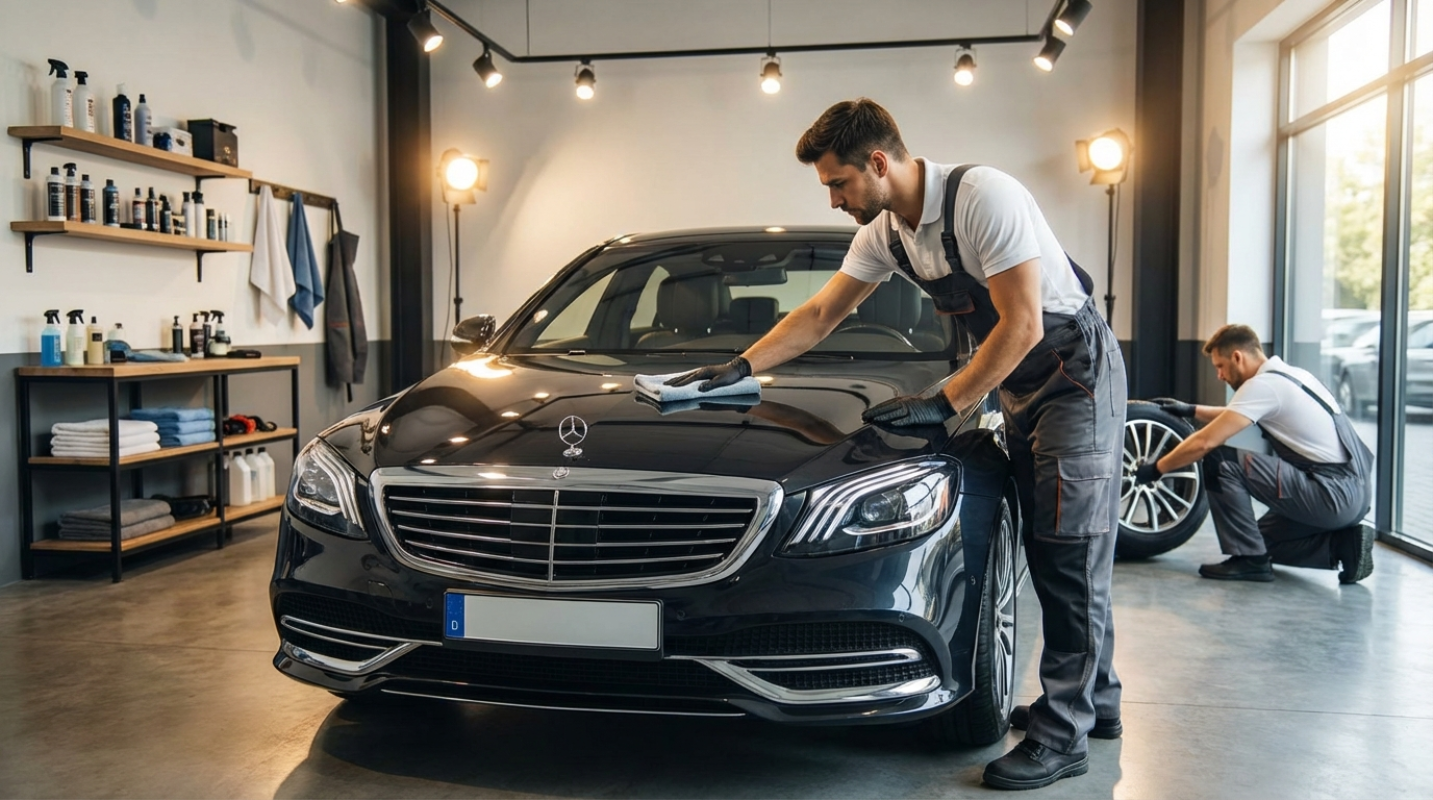
Finally, look at the workspace. Is it clean, well-lit, and controlled? Detailing, especially paint correction, is impossible to do properly without excellent lighting to spot defects.
Assessing Professionalism Before Work Begins
The relationship begins with the quote. A trustworthy detailer provides a detailed, itemized quote, not just a flat, vague price. They should explain why a ceramic coating costs more than a sealant, or why your specific vehicle needs a two-stage correction versus a one-stage polish.
They should also ace the consultation test. Do they listen to your specific needs—like protecting matte vinyl or addressing pet hair—or do they immediately try to push the most expensive package? A good detailer assesses the vehicle and recommends the service that fits your budget and goals. They educate you; they don't pressure you.
You should also inquire about safety standards. Trustworthy shops follow federal safety guidelines. Like, they must have Safety Data Sheets (SDSs) for all hazardous chemicals immediately available to employees, a requirement clarified by OSHA’s 2024 updates. If they prioritize worker and environmental safety, they likely prioritize the safety of your vehicle, too.
Warranties, Insurance, and Post-Service Follow-Up
This section is non-negotiable.
First, confirm they carry liability insurance. Accidents happen; buffers get dropped, and hoses scratch paint. If they damage your vehicle, you need peace of mind that they are covered. If they hesitate or claim they don't need insurance, find a different shop.
If you choose a high-end service like a ceramic coating, discuss the warranty upfront. How long is it guaranteed for, and what voids the warranty? You need written documentation.
Finally, the mark of a true professional is the follow-up. They don't just take your money and wave goodbye. They should offer maintenance advice: what soaps to use, how often to wash, and what to avoid. If you call back a week later with a question about a water spot, a trustworthy detailer will provide helpful guidance, cementing their role as a partner in your vehicle’s upkeep.
Top Recommendations for Vetting Your Detailer
Choosing the right detailer protects your investment far more than any insurance policy can. It requires looking past the glossy finish and demanding transparency, certification, and professionalism.
- Check for IDA Certification: Seek out detailers who have invested in professional training.
- Demand Itemized Quotes: Know exactly what you are paying for and why.
- Verify Insurance: Make sure they carry liability coverage.
- Inquire About Chemicals: Make sure they use modern, safe, and environmentally compliant products, avoiding banned solvents.