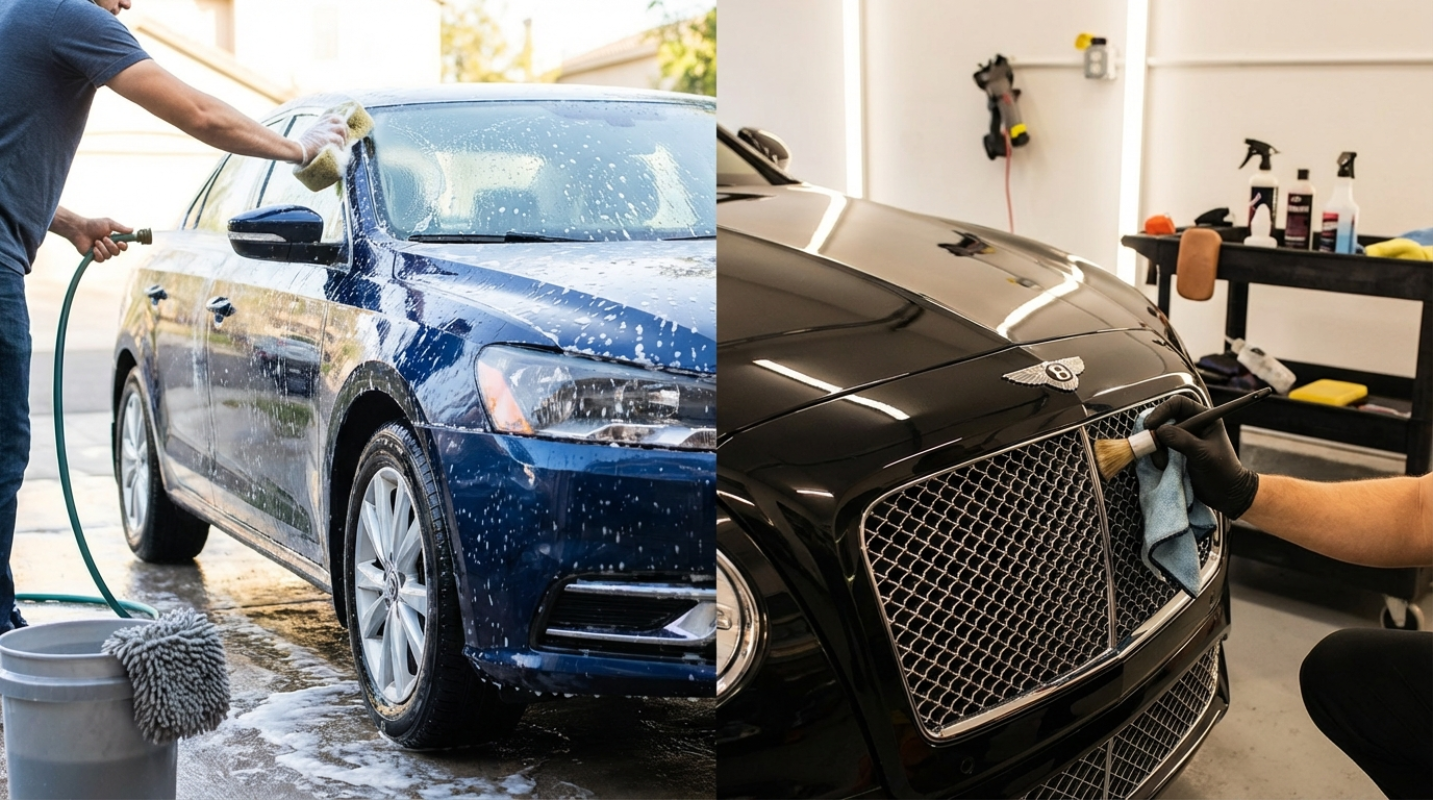
You’ve just pulled your car out of the automatic wash tunnel. It’s sparkling, wet, and smells vaguely of cherry air freshener. It feels clean, right? Mission accomplished. But here’s the thing: If you think that quick trip through the car wash is the same thing as professional auto detailing, you’re missing a huge piece of the vehicle care puzzle. This common confusion can actually cost you thousands down the line, eroding your paint and destroying your resale value. So what does this actually mean for your vehicle? The difference boils down to purpose. Washing is routine maintenance; detailing is restoration and long-term protection. Washing cleans the surface; detailing corrects flaws, deep-cleans every crevice, and applies durable barriers against environmental damage. Understanding this distinction matters to making informed choices about preserving one of your biggest assets.
Quick Fixes and Surface-Level Cleanliness
A standard car wash—whether an automated express tunnel or a basic hand wash service—is designed for speed and volume. Its primary function is to remove loose dirt, road grime, dust, and fresh contaminants that accumulate during daily driving.
Think of a car wash as sweeping the floor. It looks tidy, but it doesn't address the stains in the carpet or the dust bunnies hiding under the sofa.
These services focus almost entirely on the exterior body, wheels, and windows. Modern commercial car washes are incredibly efficient, often using sophisticated water recycling and filtration systems. In fact, they are significantly more water-wise than washing your car at home, which can waste 80 to 140 gallons of water. Commercial services often use as little as 40 to 50 gallons per wash.
Limitations of a Standard Wash
Although efficient, the wash process has severe limitations. Automated brushes, even the soft cloth strips, can introduce micro-scratches—known as swirl marks—into the clear coat over time. More importantly, they only address surface-level dirt. They don't touch the contaminants that are chemically bonded to your paint, such as rail dust, brake dust fallout, or tree sap.
A quick wash also offers minimal interior attention, usually just a basic vacuum and a window wipe. It absolutely does not involve the specialized tools or chemicals needed to address deep stains, paint oxidation, or upholstery sanitation.
Deep Restoration and Protection for Your Car
If washing is sweeping, then detailing is a full, surgical deep clean, followed by sealing and preservation. Detailing is a complete, multi-step process that tackles every surface of the vehicle, inside and out. It’s less about cleaning and more about restoration and protection.
A full detail often requires several hours, ranging from two to eight hours or more, depending on the vehicle's condition and the level of paint correction required.
Exterior Detailing
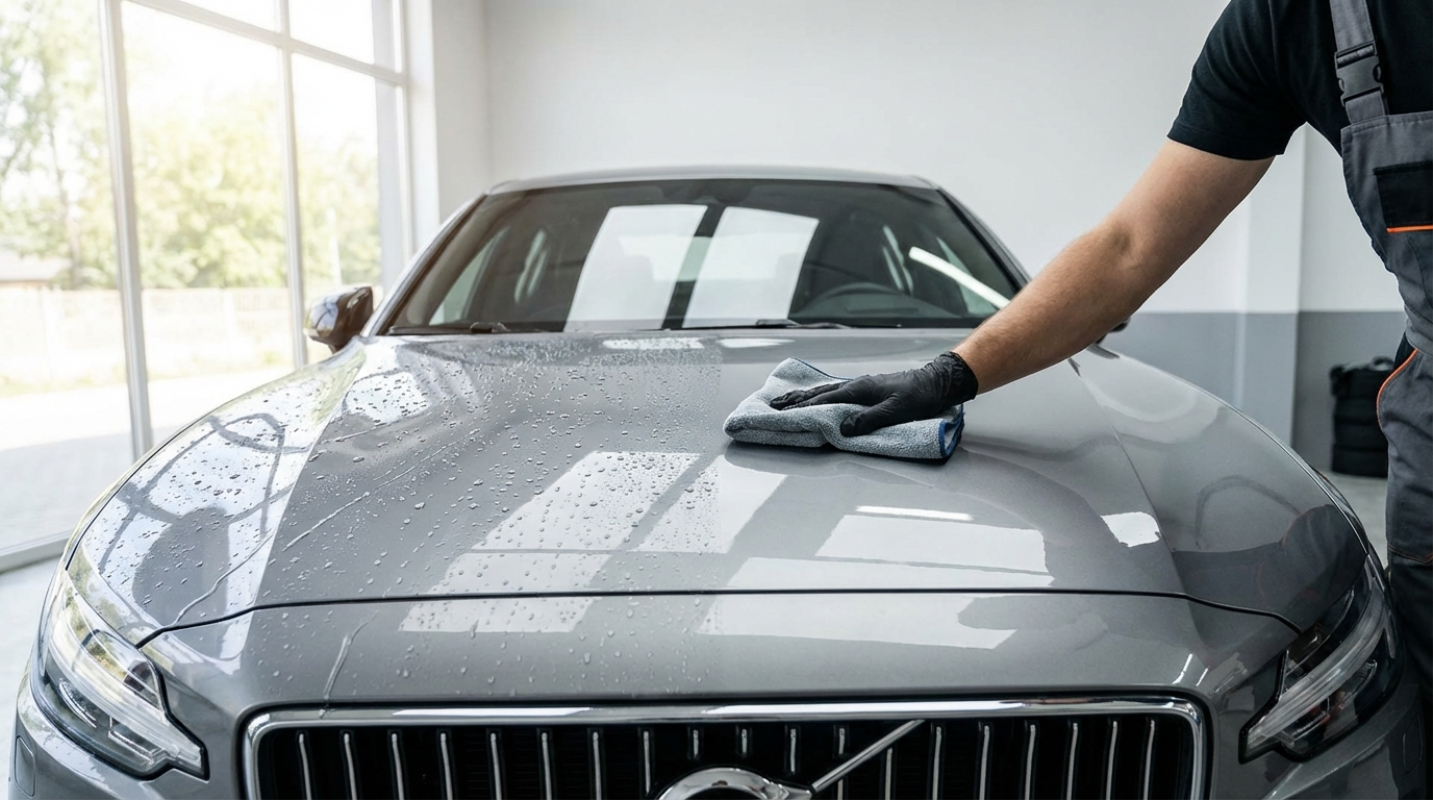
The exterior detailing process goes far beyond soap and water. It begins with decontamination. This involves chemical treatments to dissolve iron particles and tar, followed by clay barring. This physical process pulls embedded contaminants out of the microscopic pores of the clear coat, leaving the paint feeling glass-smooth.
Once decontaminated, the real work begins: paint correction. This is where detailing earns its reputation and its price tag. Using machine polishers (buffers) and specialized compounds, a detailer removes defects like swirl marks, oxidation, etching from bird droppings, and minor scratches. This isn't just covering up flaws; it's permanently removing microscopic layers of damaged clear coat to restore depth and gloss.
Finally comes the protection phase. Detailers apply durable, long-term protectants, such as paint sealants or advanced coatings. The industry is currently buzzing about the shift from traditional ceramic coatings to the emerging graphene coatings. Experts claim these offer superior durability—lasting up to 5 to 10 years—and improved resistance to water spotting.
Interior Detailing
Interior detailing is equally meticulous. It’s not just about vacuuming; it’s about sanitizing and restoring materials.
Professional detailers employ specialized equipment like steam cleaners and professional-grade extractors. Steam cleaning is an eco-friendly and highly effective method for sanitizing air vents, dashboards, and eliminating bacteria from tight spaces, using minimal water. Extractors use hot water and specialized chemicals to pull years of dirt, spilled drinks, and body oils out of fabric upholstery and carpets.
If you have leather seats, the detailer will use pH-neutral cleaners to remove dirt, followed by specialized conditioners to keep the leather supple, preventing cracking and fading. The goal is to return the cabin to as close to factory condition as possible.
Comparing the Services: When evaluating detailing versus washing, the differences in time and cost are striking, but they reflect the value delivered.
Time and Labor Investment
A standard express car wash takes minutes—maybe 15 to 30 minutes, tops. A basic hand wash might push that to an hour.
Detailing, conversely, is labor-intensive and requires significant skill. You are paying for expertise and time. Because the process involves multiple stages—washing, chemical decontamination, claying, compounding, polishing, and sealing—a full detail will take a detailer several hours, often requiring them to block off half or even a full day for your vehicle.
Cost vs. Value Proposition
Washing is budget-friendly. It’s a low-cost, routine expense.
Detailing is significantly more expensive. You might pay hundreds of dollars for a complete service. But it’s needed to view detailing not as an expense, but as an investment.
Why? Because detailing preserves the vehicle’s value. By correcting paint defects and applying durable protection like ceramic coatings, you maintain the vehicle's aesthetic condition, which directly translates into a higher resale or trade-in value when it’s time to upgrade. A well-maintained vehicle with pristine paint will always command a premium over one riddled with swirl marks and oxidized clear coat.
Maintenance vs. Restoration Schedules
Integrating both washing and detailing into your routine is the best approach for vehicle longevity. They serve different purposes and should be scheduled accordingly.
When a Wash Is Sufficient
A wash is perfectly sufficient for weekly or bi-weekly maintenance. If your car is lightly dusted, covered in road spray from a recent trip, or needs a quick refresh, the car wash is the convenient, cost-effective choice. It keeps the heavy dirt from settling and hardening, which prevents serious damage.
Many car owners use the popularity of subscription and membership programs at commercial car washes for this routine maintenance, making sure their car is always presentable.
When Detailing Is Necessary
You should schedule a professional detail when you need restoration or heavy protection.
- Seasonal Deep Cleans: Schedule a full detail twice a year—perhaps before winter to apply a protective sealant against salt and grime, and again in the spring to remove the harsh winter residue.
- Purchasing a Used Car: If you’ve just bought a used vehicle, a detail is mandatory. It make sures the removal of previous owners' stains, odors, and bacteria, and corrects any existing paint damage.
- Paint Correction Needs: If you start noticing heavy swirl marks, dull paint, or oxidation, a detailer needs to step in immediately to prevent permanent clear coat failure.
- Applying Durable Coatings: If you want years of protection via ceramic or graphene coatings, the paint surface must be surgically clean and corrected first.