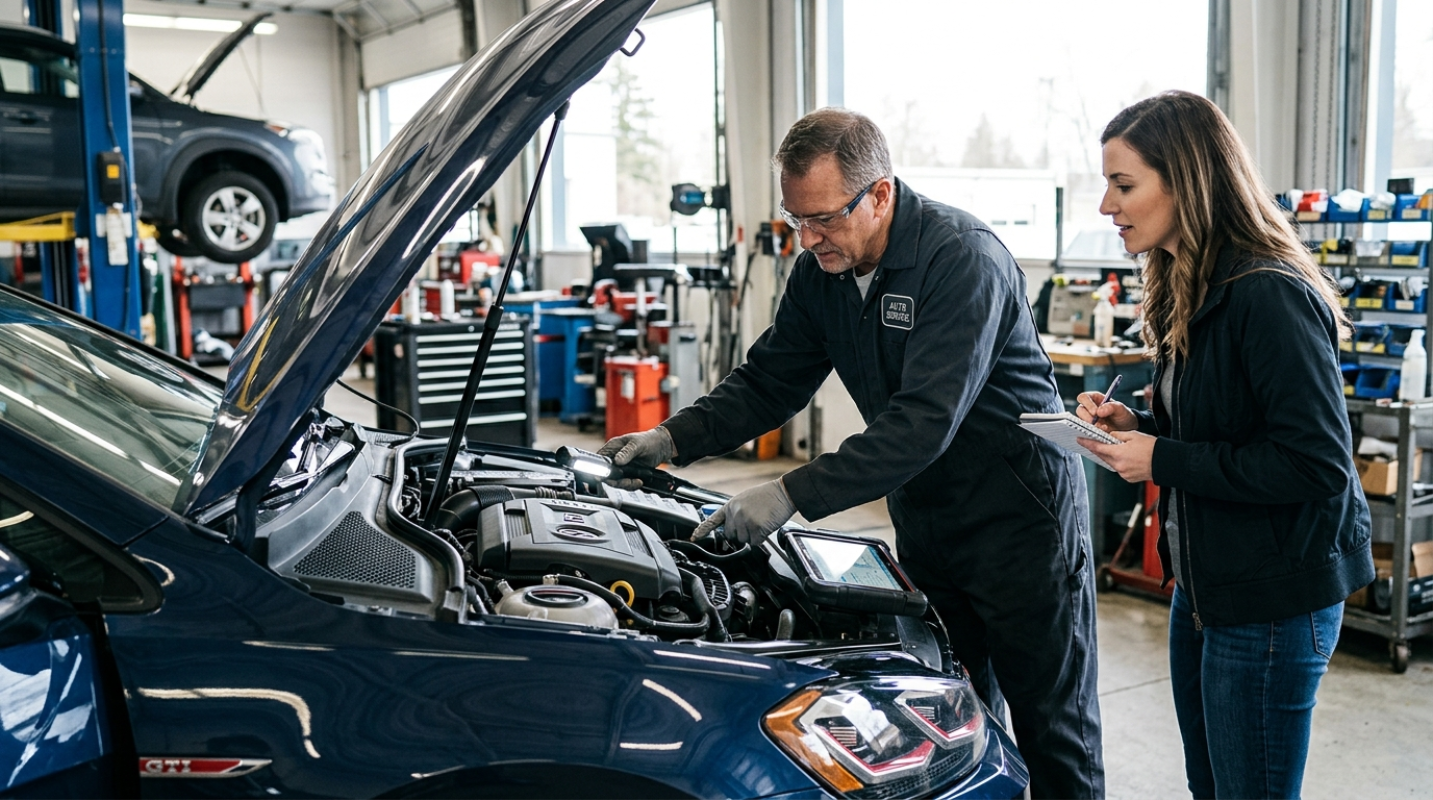
Entering an automotive service facility often triggers immediate financial anxiety, particularly when a dashboard warning light or an unfamiliar mechanical sound emerges. Managing the repair process requires a systematic approach to documentation and cost verification. Understanding the structure of a professional estimate is the most effective defense against predatory pricing. By demanding transparency in labor rates, part origins, and diagnostic fees, a driver transforms from a passive consumer into an informed negotiator.
Written Estimates as Contractual Protections
Securing a detailed, written estimate is a non-negotiable step in the 2025 repair process. Verbal quotes lack legal standing and frequently lead to "scope creep," where the final bill significantly exceeds the initial verbal agreement.
- Itemized Transparency: A professional estimate must bifurcate costs into specific categories: individual parts, labor hours, shop supplies, and taxes. In most regions, shops are legally required to stay within 10% of the written estimate unless they contact the owner for further authorization.
- Shop Fees Explained: It is common to see a "Shop Supplies" line item, usually ranging from $20 to $50. This covers miscellaneous items like cleaners, rags, and hazardous waste disposal.
- Refusal Rights: If a service center refuses to provide a physical or digital itemized breakdown before starting work, it serves as a primary red flag. An ethical technician values clear communication and will provide a document that protects both parties.
Labor Standards and "Book Time" Logic
Labor charges are frequently the most misunderstood aspect of a repair bill. These costs are rarely calculated by the actual minutes a mechanic spends on the vehicle; instead, they are based on standardized industry databases.
- Standardized Labor Rates: In 2025, the average hourly labor rate for an independent shop ranges from $110 to $160, while specialized dealership service centers often charge between $180 and $250.
- The "Flat Rate" System: Mechanics use "labor guides" that dictate how many hours a specific job should take. If the guide specifies 3.0 hours for a water pump replacement, that is what the consumer pays, regardless of whether the technician finishes in two hours or four.
- Pricing Comparison: When reviewing an estimate, specifically ask: "What is your hourly rate, and how many hours does the labor guide allocate for this specific VIN?"
Diagnostic Fees and Technical Expertise
Identifying a fault in a 2025 vehicle requires sophisticated computer interfaces and technical training. Consequently, shops charge a "Diagnostic Fee" to compensate for the time spent troubleshooting.
- Fair Price Range: A standard diagnostic fee typically ranges from $95 to $150. This fee usually covers one hour of testing and the retrieval of fault codes.
- The "Free" Diagnostic Trap: Be wary of facilities offering "free" diagnostics. Professional-grade scanners and the expertise to interpret them are significant overhead costs; shops offering this service for free often recoup the loss by inflating the subsequent part or labor prices.
- Portability of Data: Once a diagnostic fee is paid, the consumer is entitled to the specific error codes and the technician's findings. This data can be used to seek a second opinion without paying for the same test twice.
Estimated Costs for Common 2025 Repairs
To assist in budget planning, the following table outlines fair market price ranges for frequent mechanical issues across various vehicle classes.
| Repair Service | Estimated Part Cost | Estimated Labor | Total Fair Range (2025) |
| Brake Pad Replacement (Per Axle) | $60 – $120 | 1.5 – 2.0 hrs | $225 – $450 |
| Alternator Replacement | $200 – $450 | 2.0 – 3.0 hrs | $450 – $850 |
| Water Pump & Coolant Flush | $100 – $250 | 3.0 – 5.0 hrs | $500 – $1,100 |
| Starter Motor Replacement | $150 – $350 | 1.5 – 2.5 hrs | $350 – $700 |
| Fuel Injector Cleaning/Repair | $150 – $400 | 2.0 – 3.0 hrs | $400 – $850 |
Part Origin and Warranty Verification
The components used in a repair dictate both the final price and the long-term reliability of the vehicle. Drivers should actively inquire about the "grade" of parts being installed.
- OEM (Original Equipment Manufacturer): These parts are identical to those installed at the factory. They are the most expensive option but offer the highest guarantee of fitment and longevity.
- Aftermarket Alternatives: Produced by third-party companies, these parts are often 20% to 40% cheaper. High-quality aftermarket brands (e.g., Bosch, Denso) often match OEM quality, while "budget" brands may have shorter lifespans.
- Warranty Standards: A reputable 2025 service center should provide a minimum warranty of 12 months or 12,000 miles on both parts and labor. Premier shops often extend this to 24 months or 24,000 miles. If an estimate includes "no warranty" or "as-is" parts, the long-term risk to the vehicle's safety is unacceptably high.
Strategic Negotiation and Second Opinions
For any repair exceeding $1,000, obtaining a second opinion is a vital financial safeguard.
- Independent Verification: Take the written diagnostic report to a second shop and ask for a quote on that specific work. Do not disclose the first shop’s pricing initially to ensure the second quote is unbiased.
- Prioritization of Repairs: If the total estimate is overwhelming, ask the technician to categorize the repairs into "Safety Critical" (brakes, steering), "Immediate Maintenance" (leaks, belts), and "Cosmetic/Non-Essential." This allows for a staggered payment schedule that fits a monthly budget.
Disclaimer: This information is for educational purposes. Actual repair costs vary by geographic location, vehicle make, model, and the severity of the mechanical failure. Always consult with a certified technician and review your vehicle's specific service manual.