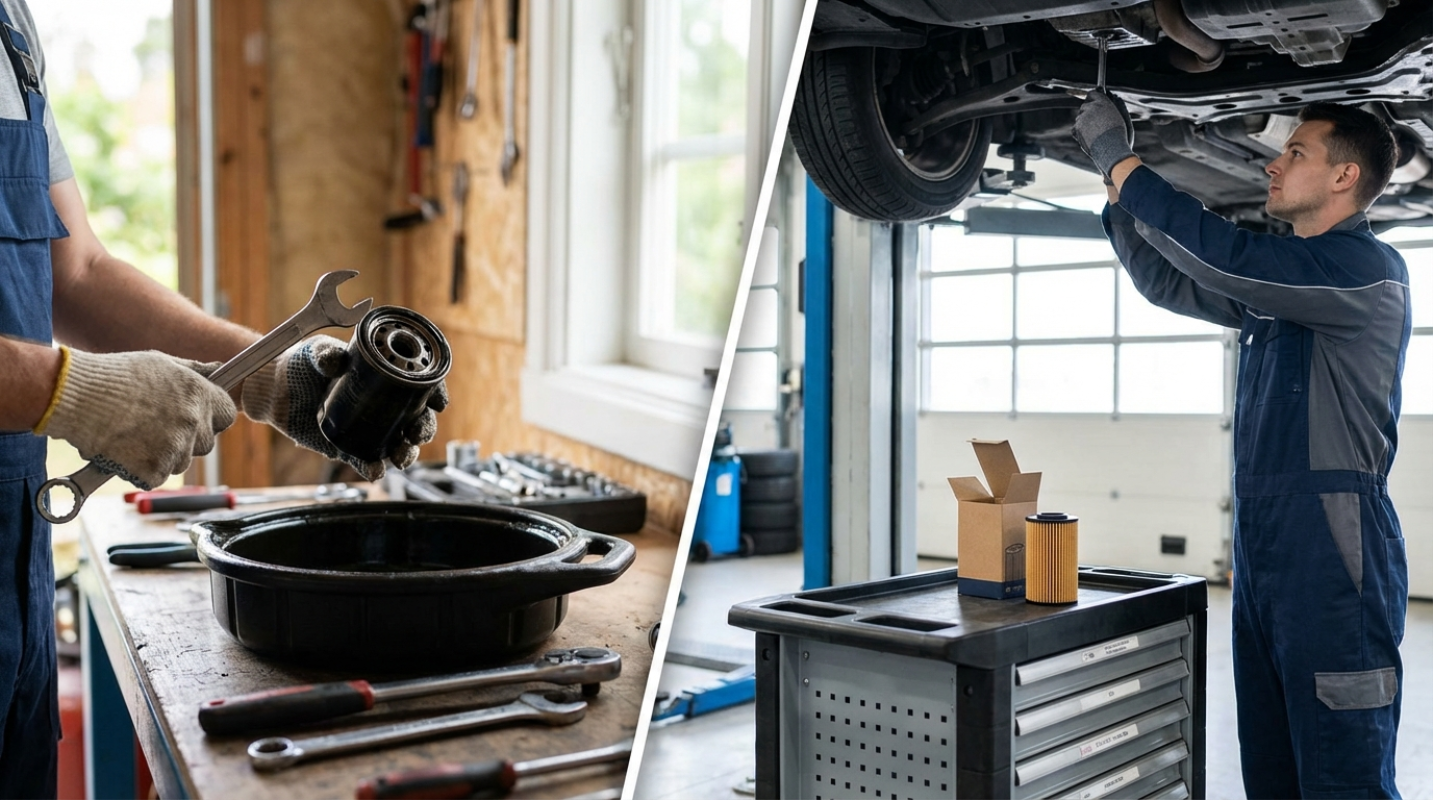
Think of your engine oil filter as the kidney of your car. It’s a simple component, yet absolutely needed. As engine oil circulates, it picks up combustion byproducts, metal shavings, and debris. The filter traps these contaminants, preventing them from recirculating and scoring the delicate internal surfaces of your engine. Without a functioning filter, your expensive motor oil quickly becomes abrasive sludge, guaranteeing premature wear and eventual failure. Because the filter must be replaced every time you change the oil—typically every 5,000 to 10,000 miles—it presents a recurring maintenance choice. Is replacing the oil filter a straightforward DIY task that saves you money, or is it better entrusted to a professional mechanic? This isn't just about skill; it's about weighing convenience, cost savings, and the high-stakes risk of a simple mistake.
Tools, Time, and Potential Pitfalls
For many car enthusiasts, doing their own oil change and filter replacement is a rite of passage. It offers immense satisfaction and gives you direct oversight of the parts going into your vehicle.
To tackle this job safely, you’ll need a few things: a floor jack and sturdy jack stands (never rely on the jack alone!), an oil catch pan, a drain plug wrench, and a specialized oil filter wrench. The time commitment is usually under an hour once you have the hang of it, and the financial savings can be substantial.
But the consequences of overlooking small details are severe. The most common DIY filter mistake is also the most catastrophic: failing to remove the old O-ring gasket from the engine block. If the old rubber gasket sticks to the block and you install the new filter on top, you create a "double gasket." This prevents a proper seal, and when the engine starts, pressurized oil will spray out, emptying the sump in seconds. If you don't shut the engine down immediately, you risk total engine seizure.
Other common errors include cross-threading the filter (which ruins the engine mount threads), installing the new filter with a dry O-ring (making it difficult to remove later), or forgetting to pre-fill the filter with new oil. Although the DIY route is rewarding, it demands meticulous attention to detail.
Expertise, Warranty, and Specialized Disposal
For many drivers, the hassle, mess, and risk involved simply aren't worth the savings. That’s when professional service shines.
Professional oil and filter changes are fast, efficient, and guarantee that the old, toxic oil and filter are disposed of correctly and environmentally. This is a huge benefit, as dumping used oil is illegal, and storing it until you can take it to a recycling center is often inconvenient.
Beyond disposal, professionals offer expertise, which is particularly valuable if you drive a complex vehicle. Modern cars often have cartridge-style filters located in hard-to-reach spots, sometimes requiring specific tools or demanding very precise, low torque specifications that can be easily missed by the amateur. Plus, paying for a service often includes value-added inspections—the mechanic will check tire pressure, fluid levels, and perhaps spot a important leak or worn brake pad that you wouldn't notice while focused solely on the oil pan.
If your vehicle is relatively new, professional maintenance might also be a requirement for maintaining your manufacturer’s warranty. Although the Magnuson-Moss Warranty Act protects your right to DIY maintenance, you must keep impeccable records and prove you followed every manufacturer specification. For peace of mind, many prefer the shop receipt.
Balancing Savings Against Risk
The primary motivator for DIY is cost, and the savings are real, especially if you drive a vehicle that requires expensive full synthetic oil.
A professional shop or quick-lube center may charge anywhere from $65 to $125 for a full synthetic oil and filter change. If you purchase the high-quality synthetic oil and filter yourself, the materials cost often hovers between $38 and $45.¹ This difference translates to potential savings of up to $87 per change, which definitely adds up over the lifetime of the car.
But that calculation assumes you already own the necessary tools. If you need to purchase a quality jack, stands, and wrenches, the initial investment can easily wipe out the savings from the first few changes. Also, you must factor in the cost of risk. If you make a mistake—like stripping a drain plug or causing a double-gasket leak—the resulting repair could cost hundreds, erasing years of DIY savings instantly.
Regardless of who installs it, the quality of the replacement filter itself matters. Don't skimp on a cheap filter to save $5. A quality filter, whether installed by you or a professional, is the key to getting the most from the lifespan of your expensive oil and, ultimately, your engine.
Consistency and Quality
The decision between DIY and professional filter replacement boils down to three main factors: your skill level, the complexity of your vehicle, and your available time.
If you are comfortable getting under the car, have the right safety equipment, and understand the important steps—especially moistening the gasket and making sure you hit the correct torque (typically 1/4 to 3/4 turn past hand-tight, or 13–17 ft-lbs with a torque wrench)—then the DIY route is a great way to save money and stay connected to your vehicle.
If you drive a specialty vehicle, are short on time, or simply don't want the mess, paying a professional is a worthwhile investment in convenience and guaranteed quality control. They handle the disposal, the liability, and the specific technical requirements. Ultimately, consistent maintenance is far more important than who performs the job. Whether you turn the wrench or pay someone else to do it, prioritize using the correct, high-quality filter every single time. Your engine will thank you.
Articles on affordableautomotiveservice.com are for informational purposes only and do not provide professional or legal advice. Consult an expert before making decisions. We are not responsible for actions taken based on this content.


.png)